

Las Vegas Shoulder Pain Treatment
From rotator cuff injuries and frozen shoulder to chronic impingement, Dr. Josephine Stanton combines chiropractic care, dry needling, and shockwave therapy to diagnose and treat the source of your shoulder pain — not just the symptoms.
Key Takeaways
- Las Vegas Shoulder Pain Treatment
- What's Actually Causing Your Shoulder Pain?
- Rotator Cuff & Shoulder Impingement
- Frozen Shoulder (Adhesive Capsulitis)
- Identify Your Shoulder Condition
What's Actually Causing Your Shoulder Pain?
Shoulder pain usually doesn't come from one event. Most long-term shoulder problems happen because of ongoing stress, bad posture, and repeated movements that slowly wear down the soft tissues and joints. The shoulder can move more than any other joint, which makes it easy to overuse. The structures that keep it stable have to work extra hard to stay centered in all directions. Over time, these small stresses build up into serious problems that can affect daily activities and sleep.
Rotator Cuff & Shoulder Impingement
Rotator cuff tears and subacromial impingement are common shoulder problems. The rotator cuff includes four muscles: supraspinatus, infraspinatus, teres minor, and subscapularis. These muscles help keep the arm bone in place during movement. If you move your arms overhead a lot, have poor shoulder blade movement, or tight front shoulder muscles, the space in your shoulder narrows. This squeezes the supraspinatus tendon and bursa, causing pain, clicking, and weakness when lifting your arm. This is known as impingement syndrome and can lead to partial rotator cuff tears.
Frozen Shoulder (Adhesive Capsulitis)
Frozen shoulder happens when the shoulder joint capsule thickens and becomes inflamed. It goes through three stages: the freezing phase (with increasing pain), the frozen phase (where stiffness is the main issue), and the thawing phase (where movement slowly returns). Movements like rotating and lifting the arm are the most limited. Treatments like chiropractic mobilization and dry needling can help ease stiffness and speed up recovery in all stages.
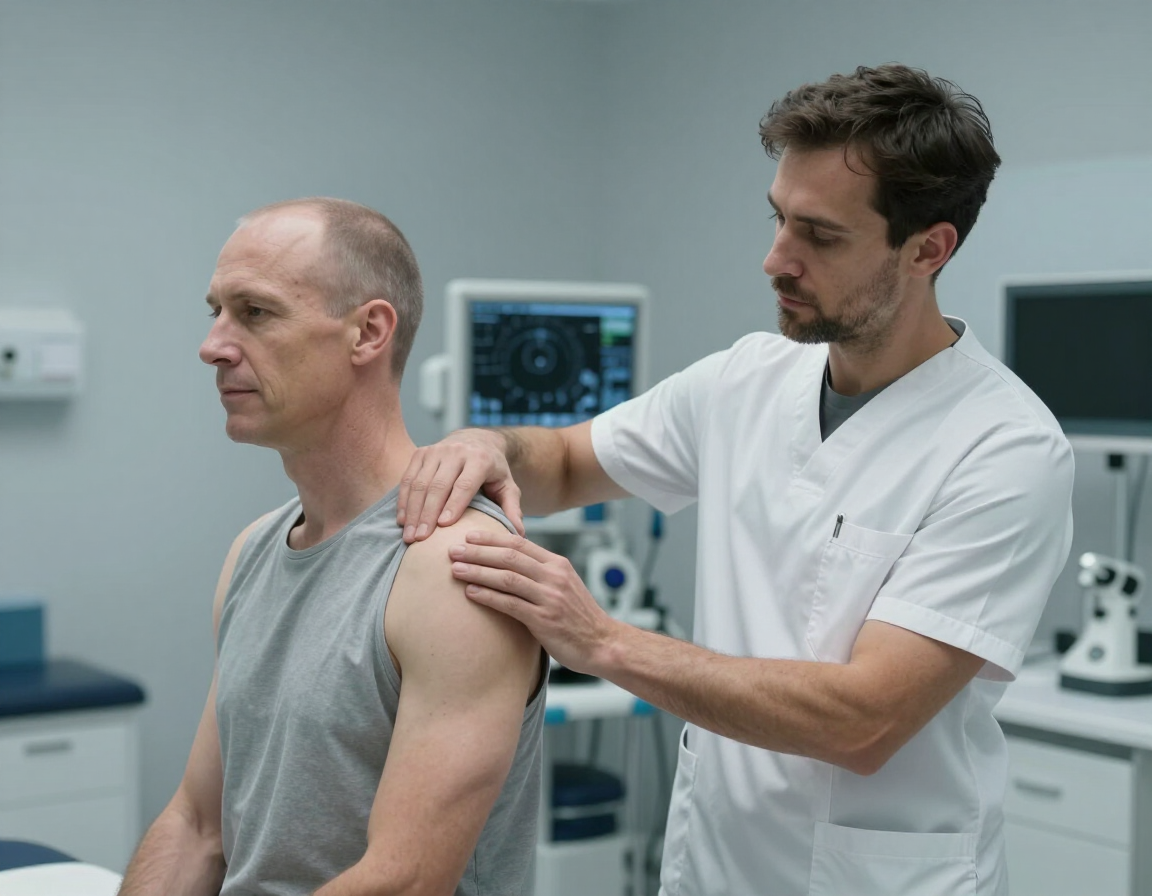
Identify Your Shoulder Condition
Use the table below to match your symptoms to a common shoulder diagnosis. Each condition responds differently to treatment — knowing the pattern helps Dr. Stanton build a more targeted recovery plan.
| Condition | Primary Symptoms | Common Cause | Best Treatment Approach |
|---|---|---|---|
| Rotator Cuff Tear | Weakness on elevation, pain with overhead reach, night pain | Repetitive overhead loading, acute strain | Dry Needling, Shockwave, Rehab |
| Shoulder Impingement | Pinching pain between 60–120° of elevation ("painful arc") | Scapular dyskinesis, postural rounding | Chiropractic, Dry Needling |
| Frozen Shoulder (Adhesive Capsulitis) | Progressive loss of external rotation and elevation, aching stiffness | Inflammatory capsular thickening, post-injury immobility | Chiropractic Mobilization, Dry Needling |
| Biceps Tendinopathy | Anterior shoulder ache, pain with lifting or supination | Repetitive elbow flexion, overhead sport | Shockwave Therapy, Dry Needling |
| AC Joint Sprain | Tenderness at the top of the shoulder, visible step deformity in severe cases | Direct impact, fall on outstretched arm | Chiropractic, Soft Tissue Therapy |
| Labral Tear (SLAP) | Deep aching, clicking or catching sensation, unstable shoulder feel | Overhead throwing, compression loading | Dry Needling, Shockwave, Referral if surgical |
How We Treat Shoulder Pain at The Wellness Project
Dr. Stanton uses a multi-modal approach — combining chiropractic joint work, dry needling for soft tissue release, and shockwave therapy for tendon and fascia repair — to target shoulder dysfunction at every layer.
Chiropractic Adjustments
Spinal and shoulder joint adjustments help fix shoulder movement by correcting problems in the neck and upper back. These areas often cause pain that feels like it's coming from the shoulder. Adjusting the C4–C6 spine segments reduces nerve irritation, which can cause pain in the shoulder and arm. Direct shoulder manipulation improves rotation and helps with conditions like impingement and frozen shoulder.
Dry Needling
Intramuscular dry needling focuses on sensitive spots in the rotator cuff, back capsule, and shoulder muscles. It helps release tight tissue and corrects muscle firing patterns that cause shoulder pain and stiffness. When the needle is placed correctly, it triggers a twitch response. This deactivates the painful spot, restores normal muscle length, and breaks the ongoing pain cycle that keeps the shoulder tense between treatments.
Shockwave Therapy
Extracorporeal shockwave therapy uses high-energy sound waves to target damaged rotator cuff tendons and bursae. It helps the body make collagen, grow new blood vessels, and speed up natural healing. This therapy works well for chronic tendon issues and calcium deposits in the shoulder, like calcific supraspinatus tendinitis, that don't improve with other treatments. Usually, results build up over 4–6 sessions.
What's Aggravating Your Shoulder?
Shoulder pain rarely comes from a single incident. These everyday patterns are the most common contributors seen at our Las Vegas clinic — and often the ones patients don't connect to their pain until we assess them.
Posture & Desk Work
• Prolonged forward head posture while working at a desk
• Rounded shoulders from extended computer use
• Sleeping on the same side nightly
• Carrying a heavy bag on one shoulder
Athletic & Physical Triggers
• Overhead sports: swimming, volleyball, tennis, baseball
• CrossFit pressing and overhead squat movements
• HYROX sled pushes and wall ball patterns
• Rapid return to training after shoulder injury
Occupational Patterns
• Repetitive reaching or lifting in warehouse/construction roles
• Extended overhead work: painting, electrical, HVAC
• Vibration exposure from power tools
• Poor ergonomic setup in desk-based roles
What to Expect: Our Shoulder Assessment Process
Every shoulder case at The Wellness Project begins with a structured diagnostic workflow. Dr. Stanton uses orthopedic, neurological, and movement-based assessments to identify the root structure driving your pain before any treatment is applied.
01
History & Symptom Interview
Dr. Stanton begins with a detailed intake conversation covering onset, mechanism of injury, pain behavior (constant vs. intermittent), aggravating and relieving factors, prior imaging, and treatment history. This ensures no structural red flags are missed before hands-on assessment begins.
02
Postural & Movement Screen
Active and passive range of motion is measured for flexion, extension, internal and external rotation, and abduction. Scapular dyskinesis, forward head posture, and thoracic kyphosis are all assessed visually and through motion testing to identify compensatory movement patterns upstream of the shoulder.
03
Orthopedic & Neurological Testing
Specific orthopedic provocation tests — including Neer's, Hawkins-Kennedy, empty can, Speed's, and O'Brien's — are used to isolate the structural tissue involved. Neurological screening rules out cervical radiculopathy as a contributing or primary pain driver.
04
Clinical Diagnosis & Treatment Plan
Based on findings, Dr. Stanton identifies the primary diagnosis, confirms whether imaging referral is warranted, and presents a personalized multi-modal treatment plan with clear recovery milestones. You leave the first visit knowing exactly what's wrong and what the plan is.
Shoulder Pain FAQ
Common questions Dr. Stanton hears from Las Vegas shoulder pain patients — answered directly.
How do I know if my shoulder pain needs imaging (MRI or X-ray)?
Imaging is recommended when there is a suspected full-thickness rotator cuff tear, significant acute trauma (fall, dislocation), or when symptoms fail to improve after 4–6 weeks of conservative care. Dr. Stanton will identify whether a referral is appropriate during your initial assessment. Many shoulder conditions — including impingement, tendinopathy, and mild tears — respond well to conservative treatment without imaging.Can chiropractic care actually help shoulder pain?
Yes — particularly when the shoulder pain has a cervical or thoracic spine component, which is more common than most patients expect. Adjustments to the C4–C6 segments and thoracic spine often reduce referred pain patterns that mimic rotator cuff pathology. Glenohumeral joint mobilization also directly improves joint mechanics and range of motion in conditions like frozen shoulder and impingement.What is dry needling and how does it help the shoulder?
Dry needling involves inserting a fine filiform needle directly into hyperirritable trigger points within the rotator cuff, periscapular, and posterior capsule musculature. This produces a local twitch response that releases the trigger point, restores normal muscle fiber length, and reduces the chronic pain signaling that keeps the shoulder guarded. It is not acupuncture — it is based on Western neuroanatomy and myofascial pain science.How many sessions does shoulder treatment typically take?
Most patients see meaningful improvement within 4–8 sessions depending on condition severity, duration of symptoms, and compliance with prescribed home care. Acute impingement cases can resolve in 3–4 visits; chronic frozen shoulder or long-standing tendinopathy may require 8–12 sessions. Dr. Stanton sets realistic milestones at the first visit so you always know where you are in the recovery timeline.Should I avoid exercise while treating my shoulder pain?
Not necessarily. Complete rest is rarely the best approach — controlled, pain-free loading is generally preferred to maintain tissue integrity and prevent deconditioning. Dr. Stanton will prescribe specific movement modifications and loading progressions as part of your plan, so you can stay active at an appropriate level while the shoulder heals. High-load overhead movements are typically modified, not eliminated.
Ready to Get Your Shoulder Moving Again?
Dr. Josephine Stanton sees shoulder pain patients at The Wellness Project — 8275 South Eastern Avenue, Suite 267, Las Vegas, NV 89123. Same-week appointments are available. Book online now to start your assessment.