
Dry Needling Las Vegas
Precision trigger-point therapy at The Wellness Project — evidence-informed dry needling for musculoskeletal pain relief in Las Vegas, NV.
How Dry Needling Works
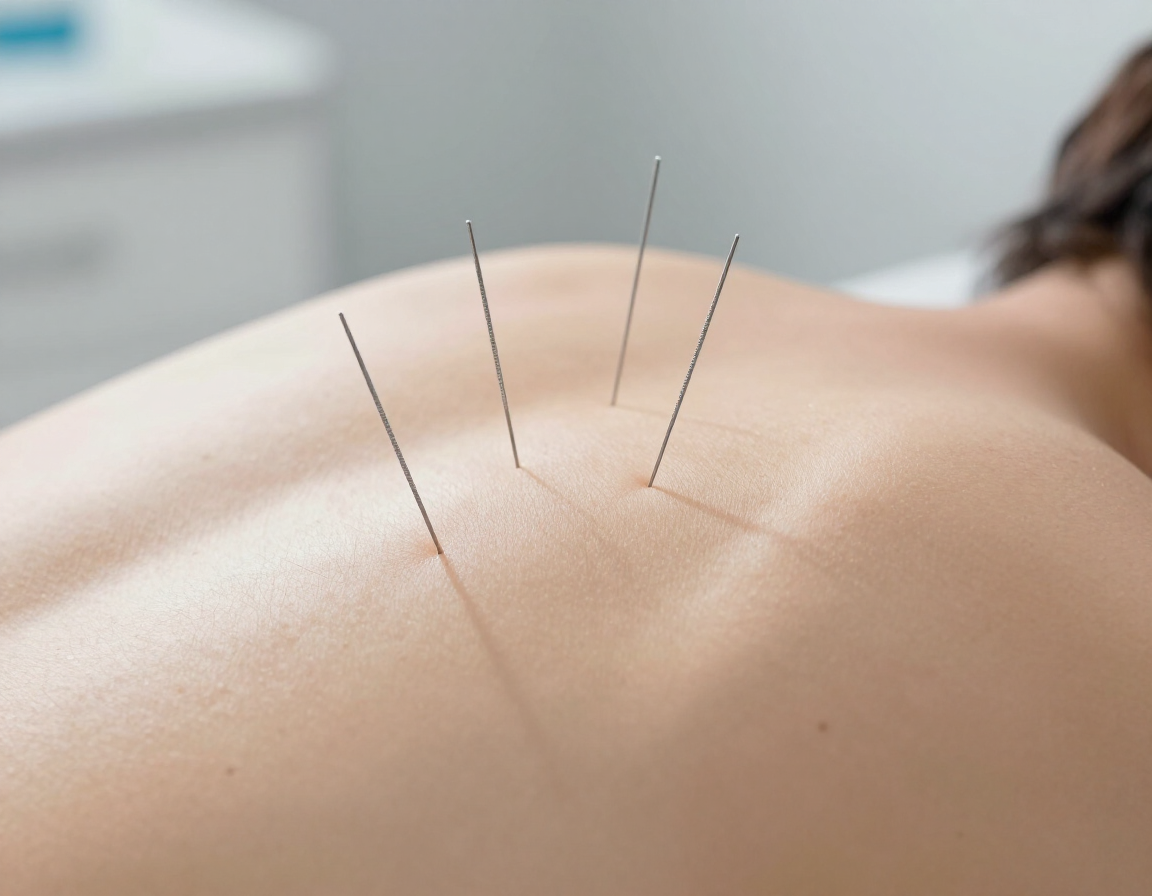
Dry needling is a clinically guided technique in which a thin, solid filiform needle is inserted directly into a myofascial trigger point — a hypersensitive, contracted band of muscle tissue. The mechanical stimulus causes a local twitch response that disrupts the dysfunctional contraction cycle, restores blood flow, and initiates a tissue-repair cascade.
Unlike acupuncture, dry needling is rooted in Western musculoskeletal anatomy and neurophysiology — not meridian theory. Dr. Stanton uses it as a precision tool targeting the specific structure generating a patient's pain, not as a standalone treatment but as part of a multi-modal system.
Needle stimulation also activates the central nervous system, modulating pain-gate signaling and promoting endogenous opioid release — which is why patients often report lasting relief after just a few sessions.
Dry Needling vs. Other Pain Relief Approaches
See how dry needling compares on the dimensions that matter most for resolving musculoskeletal pain.
| Feature | Dry Needling | Massage Therapy | Corticosteroid Injection |
|---|---|---|---|
| Mechanism of action | Needle inserted into trigger point to release dysfunctional muscle contraction and stimulate tissue repair | Manual pressure applied to soft tissue to improve circulation and reduce surface tension | Anti-inflammatory steroid injected near affected joint or tissue to suppress local inflammation |
| Targets trigger points directly | Yes — precision insertion at the exact trigger point | Partially — depends on therapist skill and pressure | No — targets inflammation, not trigger points |
| Onset of relief | Often within 1–3 sessions | Temporary relief during/after session | Days to weeks after injection |
| Number of sessions typically needed | 2–6 for most conditions | Ongoing maintenance required | Limited to 3–4 injections per year |
| Invasiveness / recovery time | Minimally invasive; mild soreness 24–48 hrs | Non-invasive; no recovery time | Invasive needle injection; potential flare 1–2 days |
| Best suited for | Myofascial pain, trigger points, sports injuries, chronic tension | Stress, mild muscle tightness, maintenance | Acute joint inflammation, bursitis, tendinopathy |
Conditions We Treat with Dry Needling
Dry needling is effective for a wide range of musculoskeletal and pain conditions. Select a condition to learn more.
Back Pain
Release deep spinal muscle trigger points driving chronic or acute low back pain.
Shoulder Pain
Target rotator cuff and deltoid trigger points causing restricted range of motion.
Neck & Upper Trap Tension
Decompress upper trapezius and cervical trigger points causing referred neck pain.
TMJ & Jaw Pain
Reduce masseter and pterygoid hypertonicity contributing to TMJ dysfunction and jaw pain.
Chronic Headaches
Interrupt suboccipital and cervical trigger point referral patterns behind tension headaches.
Hip Flexor & Glute Tightness
Restore hip mobility by releasing psoas, iliacus, and glute medius trigger points.
Sports & Overuse Injuries
Accelerate recovery from repetitive strain and athletic overuse with targeted needling.
What to Expect During Your Dry Needling Session
Three straightforward steps — no guesswork, no surprises. Here's exactly how your appointment works.
01
Assessment & Consultation
Dr. Stanton begins every session with a brief postural and movement screen to confirm which muscles and trigger points are driving your symptoms. This ensures needles go exactly where the dysfunction lives — not just where you feel pain.
02
Targeted Needling
Thin filiform needles are inserted into the identified trigger points. You may feel a brief local twitch response — a sign the needle has found its target. Most patients describe it as a deep aching pressure that resolves within seconds.
03
Recovery Guidance & Next Steps
After the session Dr. Stanton reviews expected post-treatment sensations (mild soreness 24-48 hours is normal), gives movement or stretching guidance, and outlines the recommended treatment frequency for your condition.
Dry Needling FAQs
Common questions from patients considering dry needling at The Wellness Project in Las Vegas.
Is dry needling painful?
The needle insertion itself causes minimal sensation — most patients barely feel it. The local twitch response that follows feels like a brief, deep ache that resolves within seconds. Mild muscle soreness 24–48 hours after your session is common and is actually a sign of therapeutic activity as your body initiates its repair process.How is dry needling different from acupuncture?
Dry needling is rooted in Western musculoskeletal anatomy and neurophysiology. Dr. Stanton identifies specific myofascial trigger points through clinical assessment — palpation, movement screens, and patient history — and targets those exact structures. It is not based on traditional meridian theory. Think of it as a precision structural tool rather than an energy-based modality.How many sessions will I need?
Acute conditions often respond well in 2–4 sessions. Chronic or more complex presentations — long-standing tension patterns, recurring sports injuries — may require additional visits. Dr. Stanton assesses your progress at every visit and adjusts the treatment plan accordingly. You'll never be kept on a plan longer than necessary.Is dry needling safe? Are there side effects?
When performed by a trained clinician, dry needling is very safe. Minor bruising at the needle site, temporary muscle soreness, or brief light-headedness occasionally occur and resolve quickly. Serious adverse events are rare. Dr. Stanton holds advanced dry needling credentials (DN1, DN2) and follows rigorous clinical protocols.Who is a good candidate for dry needling?
Patients with active trigger points, persistent muscle tension, sports injuries, or chronic pain patterns that haven't resolved with passive therapies typically respond very well to dry needling. Relative contraindications include certain bleeding disorders, active local infections, pregnancy (first trimester), or needle phobia. Dr. Stanton screens every patient prior to treatment to confirm candidacy and ensure your safety.
Ready to Resolve Your Pain? Book Dry Needling in Las Vegas Today.
The Wellness Project is located at 8275 South Eastern Avenue, Suite 267, Las Vegas, NV 89123. Dr. Josephine Stanton accepts new patients — online booking is fast and easy.
Key Takeaways
- Targeted Recovery: Precision dry needling targets myofascial trigger points to disrupt pain cycles and restore blood flow.
- Evidence-Based: Rooted in Western neurophysiology and anatomy, providing a clinical alternative to traditional acupuncture.
- Rapid Results: Most patients experience significant relief from chronic back, neck, or joint pain within 2 to 4 sessions.
- Expert Care: Specialized treatment delivered by Dr. Josephine Stanton at The Wellness Project's Las Vegas location.